
Memorandum
- From
- Delaney Sawyer via fox - World
- Date
- Filed
- Politics·6 min to read
- Re
Armenia launches US-backed Trump Route along Iran's border despite Tehran threats
ReArmenia launches US-backed Trump Route along Iran's border despite Tehran threats
Armenia is set to launch the U.S.-backed TRIPP transport and energy corridor on its southern border with Iran, drawing sharp warnings from a senior Iranian adviser.
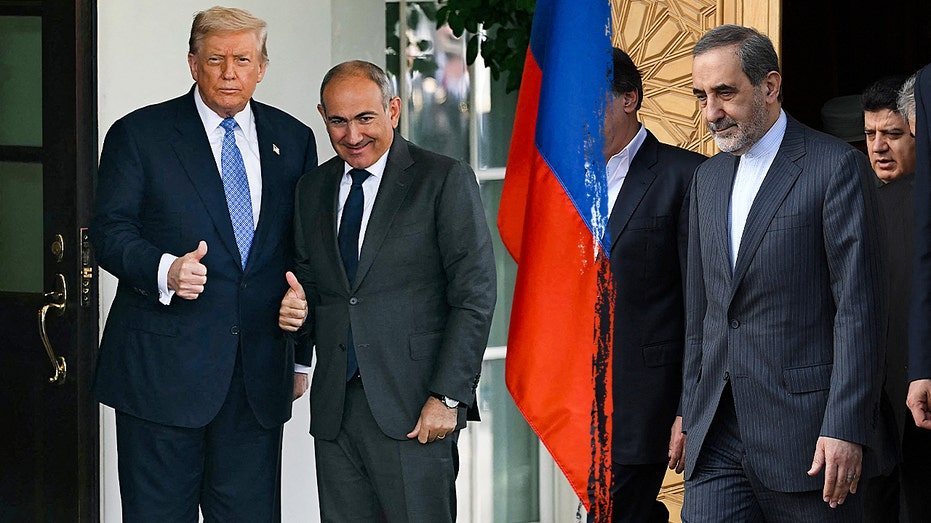
Armenia is set to launch the Trump Route for International Peace and Prosperity, known as TRIPP, along Iran's northern border on Monday, despite a stark warning from a senior Iranian official that Tehran would « break their legs » if President Donald Trump and his allies crossed what it calls a red line. Armenian Prime Minister Nikol Pashinyan confirmed the launch date while speaking at the DigiTec 2026 technology conference in Yerevan, according to reporting by Interfax as cited by Turkish media.
The project is designed to connect mainland Azerbaijan with its Nakhchivan exclave through southern Armenia and to establish energy links with Turkey and Azerbaijan. It is a centerpiece of a U.S.-brokered peace initiative between Armenia and Azerbaijan and would expand American economic involvement in the South Caucasus, a region where Iran has repeatedly warned against developments it believes could threaten its security or regional influence. Pashinyan told the conference that the program would strengthen Armenia's regional energy connections, adding that energy and electricity transit would be an important component. « We will now connect our network to the electricity grids of Türkiye and Azerbaijan, » he said during a public discussion on artificial intelligence.
The threat came from Ali Akbar Velayati, a senior foreign policy adviser to Iranian Supreme Leader Mojtaba Khamenei. In a November 5 article published by the Iranian newspaper Ettelaat, and reported by Iran's Tasnim News Agency, Velayati wrote that he had told the Armenian ambassador clearly that if Trump and his allies wanted to cross the Iranian red line, Tehran would break their legs. He accused Armenia of disregarding Iran's security concerns over the proposed route and said Iran would defend its interests in the South Caucasus regardless of Russia's involvement.
The timing carries added weight because the corridor has become strategically sensitive during the ongoing U.S.-Israeli war with Iran. Tehran is seeking to secure its northern trade routes and limit the American security presence near its borders, while Washington maintains a naval blockade and a task force focused on Iran's frontiers. Against that backdrop, the route is being watched closely as a potential shift in the balance of influence near Iran's northern frontier.
The roughly 26-mile corridor would run through Armenia's southern Syunik province, close to the Iranian border. It would include railways, roads, electricity transmission lines and fiber-optic cables, linking Central Asia with Europe and providing an onward connection to Turkey, a NATO member. Azerbaijan refers to the proposal as the « Zangezur Corridor, » and Iran has long opposed arrangements that it fears could weaken Armenia's control over the territory, disrupt Iran's access to Armenia or expand the presence of outside powers near its borders.
Velayati's opposition is not new. In August 2025 he warned that the corridor could become a « graveyard » for what he called Trump's mercenaries, saying it would not be a route owned by the U.S. president. He also argued that Russia opposed the corridor on strategic grounds. During a December 2025 meeting with Armenia's ambassador to Tehran, Grigor Hakobyan, he again raised concerns about the route, according to Iran International.
The project grew out of a diplomatic initiative aimed at ending decades of conflict between Armenia and Azerbaijan over Nagorno-Karabakh, an internationally recognized part of Azerbaijan that was controlled for years by ethnic Armenian separatists before Azerbaijani forces retook the territory in 2023. In 2025 Trump hosted Pashinyan and Azerbaijani President Ilham Aliyev at the White House, where the two leaders signed a joint declaration intended to advance peace, normalize relations and reopen regional transportation links. That declaration laid the groundwork for TRIPP and gave Washington a central role in developing the infrastructure.
Under the implementation framework announced in January by Secretary of State Marco Rubio and Armenian Foreign Minister Ararat Mirzoyan, a TRIPP Development Company would oversee construction. A U.S.-controlled entity would hold a 74 percent ownership stake, with Armenia retaining 26 percent. The company would receive development rights for an initial 49-year period, with an option for a further 50-year extension, under which Armenia's stake would rise to 49 percent. Armenian authorities would keep jurisdiction over the territory, including customs, immigration, law enforcement and border security, while private operators could help facilitate trade and transit.
Armenia's parliament ratified the agreement on October 28 by a vote of 63 to 32, and President Vahagn Khachaturyan signed the ratification law on November 12. With the legal steps completed, Monday's launch marks the transition from agreement to implementation, and the reaction from Tehran will be closely watched as construction moves forward along a border that Iran regards as a red line.
40

Source: Tehran threatens to 'break legs' as 'Trump corridor' prepares to launch on Iran's border