Memorandum
- From
- Connor Quincy via fox - U.S.
- Date
- Filed
- News·6 min to read
- Re
Filmmaker says Kohberger's choice of house full of women may reveal Idaho murders motive
ReFilmmaker says Kohberger's choice of house full of women may reveal Idaho murders motive
The director of a Netflix docuseries about the murders of four University of Idaho students says Bryan Kohberger's decision to attack a rental house where five women lived could point to hatred of women as the motive he never disclosed.
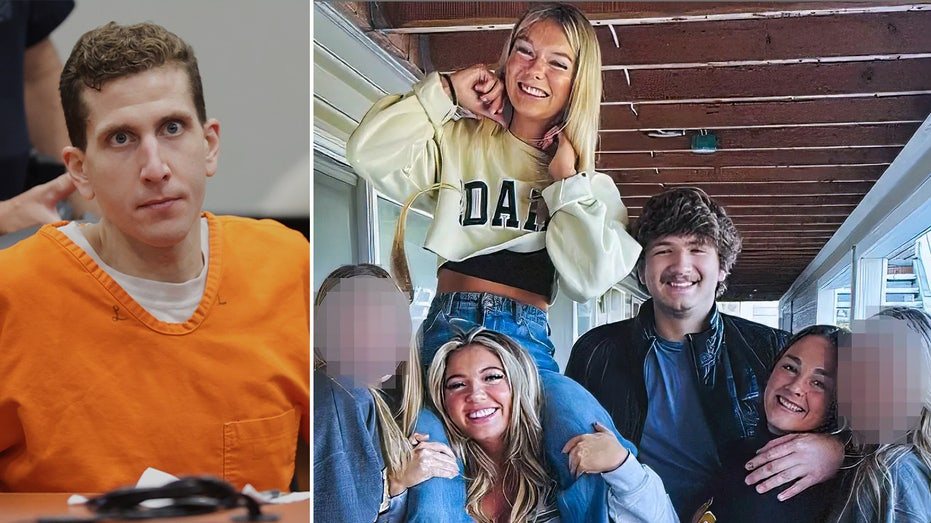
The director of a new documentary series on the killings of four University of Idaho students says Bryan Kohberger's choice of targets — a rental house where five women lived — could be the closest clue to the motive he has never disclosed.
Skye Borgman, who directed the Netflix docuseries «The Idaho Murders: College Nightmare», said the off-campus home in Moscow, Idaho, was not chosen at random. On the night of the attacks, Xana Kernodle's boyfriend, Ethan Chapin, was also there, but the household was otherwise made up of women. «This was a house that had five women living in it», Borgman said. «It seems quite clear that he targeted it.»
Kohberger, 31, is serving four consecutive life sentences without the possibility of parole after pleading guilty to the stabbing murders of Kaylee Goncalves, Madison Mogen, Xana Kernodle and Chapin in 2022. All four were University of Idaho students.
Borgman said Kohberger had been near the house well before the attack. «He watched the house; he was around the house in the days, weeks and months leading up to the murders», she said, adding that it seemed likely he held «a very low regard, if not hatred, for women».
She acknowledged the conclusion was speculative but pointed to a broader pattern of strained encounters between Kohberger and women described by people who knew him. «It's all conjecture, but he seemed to struggle with his relationships with women», Borgman said. «We look at this incel movement and the question of whether or not he was an incel. It seems to me that there was a hatred of women there.»
Former classmates interviewed for the documentary described Kohberger as «not particularly well liked» and said he often spoke down to women, engaged in what they called «mansplaining» and could turn argumentative or aggressive in conversations. Several students said they found him «creepy» and felt uncomfortable around him. Former classmate Lilly Karaban recalled him as someone with a «his way or the highway» attitude who seemed to live «in his own world».
Moscow Police Chief Anthony Dahlinger acknowledged in the documentary that there were «strange incidents and strange behavior» surrounding Kohberger. Former Washington State University Police Chief Gary Jenkins recounted a student's account of feeling cornered by Kohberger during an aggressive encounter and believing he occasionally followed her to her car. Kohberger was eventually removed from his teaching assistant position, though Jenkins said none of the incidents were reported to police because «nothing that occurred rose to the level of a crime».
FBI special agent Ed Jacobson, who was involved in the investigation, said in the documentary that investigators never found evidence tying Kohberger to the incel movement, an online subculture of mostly men who blame women for their lack of romantic or sexual relationships. «But Bryan Kohberger was very good at hiding his online activity», Jacobson noted.
For Borgman, the biggest unanswered question remains why Kohberger carried out the attack. «I would love to, along with the rest of the world, know why he did what he did», she said. «But it is one of those things that I don't think any of us will ever know. That's a frustrating thing for myself and I know especially for the families. They wish so truly that he had been forced through the terms of his plea deal to give us more information about the why of it all.» Karaban said she believed Kohberger «has a thing against women» and that people who brutalize women as he did «dislike them, find them threatening, so they take all that anger out on them».
Author James Patterson, who wrote a book about the case, said his reporting turned up multiple accounts of unwanted interactions between Kohberger and women before the murders. At a brewery in Bethlehem, Pennsylvania, Kohberger allegedly pushed his way into conversations with female bartenders and patrons and asked for their addresses. Some women complained to the owner about «the creepy guy with the bulging eyes». Patterson said almost everyone they spoke to described Kohberger the same way: «This is a strange man with a strange look — couldn't look people in the eye». If he did look at someone, Patterson said, people often wished he had not.
A police report described a 2019 encounter at a club about two hours from Kohberger's family home, where a dancer said a man she now believes was Kohberger told her he wanted to kill people. When she asked who, she said he replied, «Whoever I want». She alerted bouncers and only recognized him after seeing his photo on television following his arrest.
Borgman believes Kohberger was trying «to commit the perfect crime» and failed. «But I think his silence is a way of attempting to keep the spotlight focused on him», she said.