
Memorandum
- From
- Delaney Sawyer via Fast Company
- Date
- Filed
- Business·5 min to read
- Re
T-Mobile CEO Srini Gopalan bets on customer obsession and rivalry
ReT-Mobile CEO Srini Gopalan bets on customer obsession and rivalry
T-Mobile CEO Srini Gopalan says the carrier will keep its challenger spirit, centered on customer obsession and a front-line focus, even as it has grown into a telecom giant.
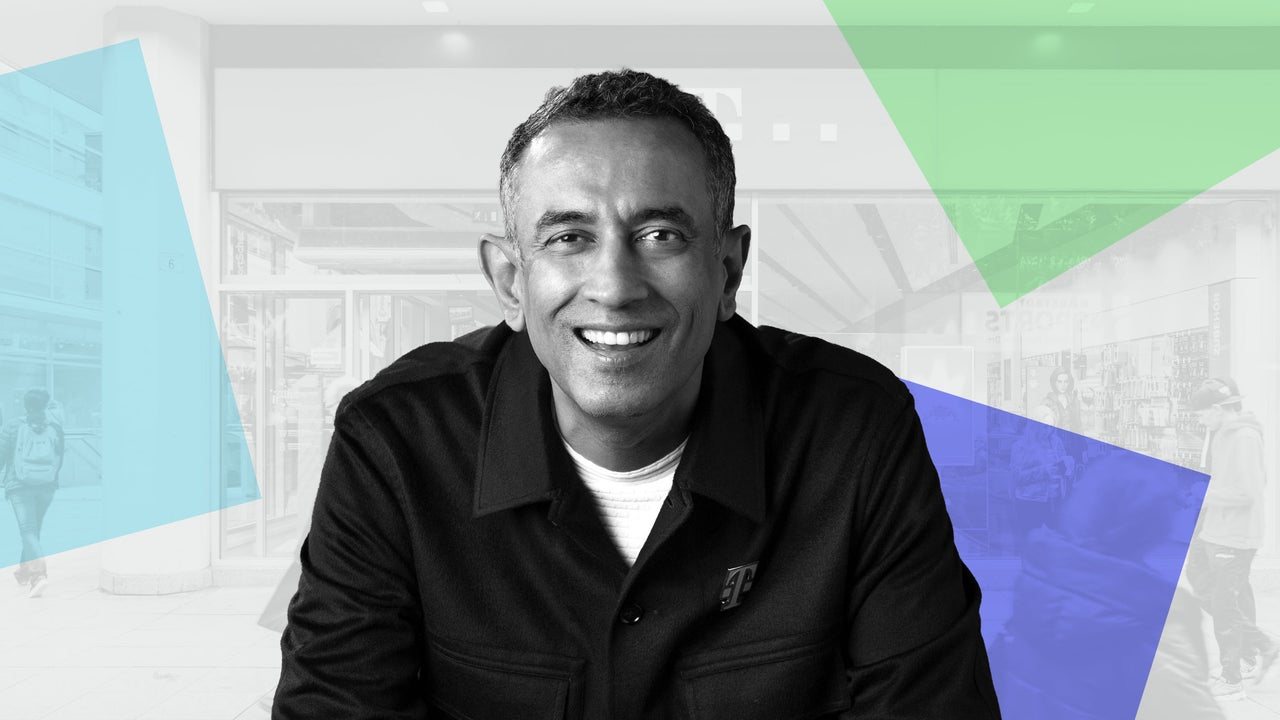
T-Mobile CEO Srini Gopalan says the company will keep the scrappy, challenger mindset that first made it famous, even though it is no longer the smallest player in the wireless market. Gopalan, who became CEO a year ago after an eight-month stint as chief operating officer, describes the carrier's culture as "unmistakably T-Mobile," built on an intense focus on customers and frontline workers.
The company's scale has changed considerably since its days as the runt of the telecom litter. T-Mobile reported total revenue of $88.3 billion in 2025, up 8.5% from the previous year, and ended the year with 142.4 million customers across all its services. Its market capitalization is about $167 billion, behind Verizon at roughly $186 billion but ahead of AT&T at about $144 billion. Last week, the company also reported stronger-than-expected third-quarter earnings, raised its profitability and cash flow guidance, and said it expects to add approximately 1.0 million postpaid accounts in 2026. Much of that growth followed its 2020 merger with Sprint.
Gopalan says that after five years of merger integration and network improvements, the time is right to revive the company's identity as "the un-carrier." In his framing, that means "disruption for the sake of the customer" and putting frontline staff and employees first. He describes the culture he wants as an obsession with customers and the frontline, "done with a twinkle in your eye, done in a cheeky, irreverent manner, done in a surprising and memorable manner."
To reinforce that approach, Gopalan is expanding Frontline Connect, a program in which T-Mobile leaders spend two days working in a retail store or care center. The program was previously required for vice presidents and above and will now extend to directors and up. Executive stock-based compensation is tied to an executive's personal commitment to the frontline and completion of the program. The company has also announced a one-time, performance-based stock grant of $12,000 for every eligible employee, starting in January 2027.
On the product side, T-Mobile continues to test new pricing and offers. The T-Mix plan, piloted in October and launching broadly this month, lets customers mix and match add-on services, called picks, such as streaming services or phone upgrades. Customers can switch picks four times a year instead of annually. Gopalan also sees growth beyond traditional wireless, including selling more home broadband and pushing further into the business-to-business segment, as well as financial services. He points to a credit card the company has issued with Capital One.
The approach has drawn friction from rivals. Last year, AT&T sued T-Mobile over its Easy Switch feature, an AI-powered tool that asked rivals' customers to share their logins and passwords to create a personalized wireless offer. AT&T said T-Mobile used those credentials to scrape data and secured a federal court injunction barring parts of the original feature. AT&T has since filed a new complaint alleging that T-Mobile's Switching Made Easy plan, which promises to let customers change carriers in 15 minutes, is misleading. An AT&T spokesperson said T-Mobile has been "playing fast and loose with the truth," adding that the company would keep "calling it like we see it." T-Mobile responded that Easy Switch was designed to help consumers understand their options and that it welcomes collaboration with AT&T and others to make switching easier.
Investors are also watching the competitive landscape closely. In early October, the day after Elon Musk's Starlink agreed to acquire cellular spectrum licenses in a bid to build a national wireless network, shares of T-Mobile, Verizon and AT&T each fell at least 8%. Asked whether he would rather compete with other telecom companies or Starlink, Gopalan shrugged off the threat. "Bring them on. From our perspective, we love competition. We think it makes the industry better. It forces us to be better," he said. On Starlink, he noted that the company has described its plans in different ways over the past six months and that building a network would take a long time. He said T-Mobile will keep investing in its network and employees, adding, "We're going to love our front line more than we've ever loved them before because that is part of our secret sauce."
5

Source: Customer obsession ‘done with a twinkle in your eye’