Memorandum
- From
- Connor Quincy via Bloomberg Originals
- Date
- Filed
- Business·4 min to read
- Re
Google president Ruth Porat describes company's shift to AI-first strategy
ReGoogle president Ruth Porat describes company's shift to AI-first strategy
Ruth Porat, president and chief investment officer of Alphabet and Google, said the company's move to an AI-first strategy has reshaped her role since she joined in 2015.
Ruth Porat, president and chief investment officer of Alphabet and Google, has described how the company's pivot to an AI-first strategy has changed the work she oversees. In a Bloomberg interview, she recalled joining the company in 2015 and reflected on how the shift has altered her responsibilities over the years.
The conversation, released as a short video in Bloomberg's Leaders series hosted by Francesca Lacqua, focused on the internal transformation at one of the world's largest technology companies. Porat's account offers a view from inside the finance and investment side of Alphabet as artificial intelligence moves from a research priority to the organizing principle of its products and spending decisions.
The interview is part of Bloomberg's broader Leaders programming, which features executives discussing business, technology and finance. Porat's remarks underscore how Alphabet's push into AI now touches nearly every part of the company, from the products used by consumers to the capital allocation choices that shape its long-term direction.
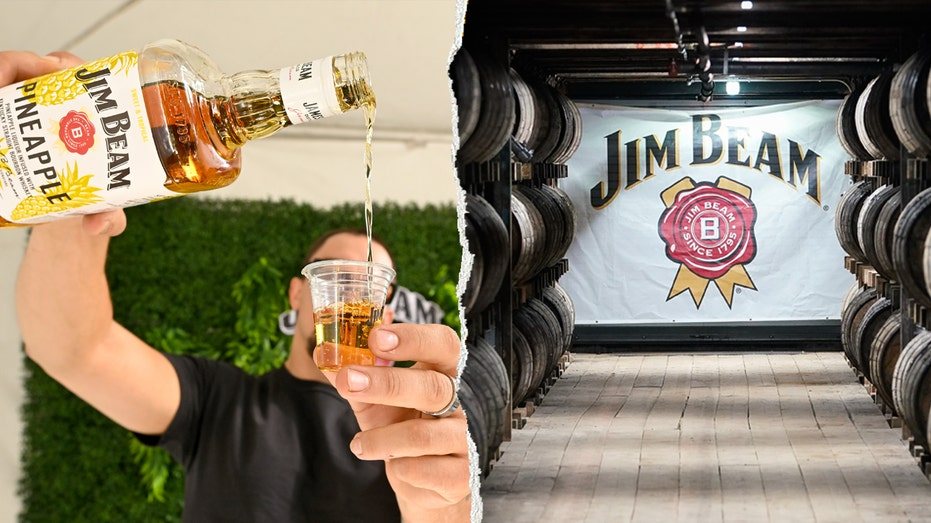
Beyond the Google interview, the same reporting environment this week has highlighted how sweeping strategic shifts are reshaping established corporations. In a separate development, Jim Beam said it will indefinitely pause production at its flagship distillery in Clermont, Kentucky, a move the company attributes to declining whiskey sales and record inventories. The brand, owned by Suntory Global Spirits, had announced last December that it would pause production at the facility for one year, with plans to resume operations in 2027. The company now says it is uncertain when the Clermont distillery will restart.
Suntory told The Courier Journal that it manages its Kentucky production according to demand, inventory and long-term needs, and that it plans to reassess production requirements in the future. In the meantime, Jim Beam has shifted output to its Booker Noe Distillery in Boston, Kentucky, which produces 45 million original proof gallons annually and is the brand's largest distillery. The Fred B. Noe distillery on the Clermont campus will continue operating and produce labels including Knob Creek, Little Book and Booker's.
The whiskey decision reflects a broader slowdown. Whiskey inventory in the United States was roughly three times higher than estimated annual demand, according to the drinks data firm IWSR, which reported the imbalance in October. Members of the Kentucky Distillers Association held 16.1 million barrels of whiskey as of October 2025. IWSR also reported that total beverage alcohol sales declined for the third consecutive year in 2025, and its managing director Marten Lodewijks said growth across Scotch, American, Japanese and Irish whiskey is concentrating in premium price tiers while mainstream and value segments absorb the pressure.
Taken together, the Porat interview and the Jim Beam decision illustrate two different responses to changing markets: one company reorganizing around a technology bet, and another adjusting production to weaker demand. Both show how corporate leaders are making large structural choices as business conditions evolve.
38